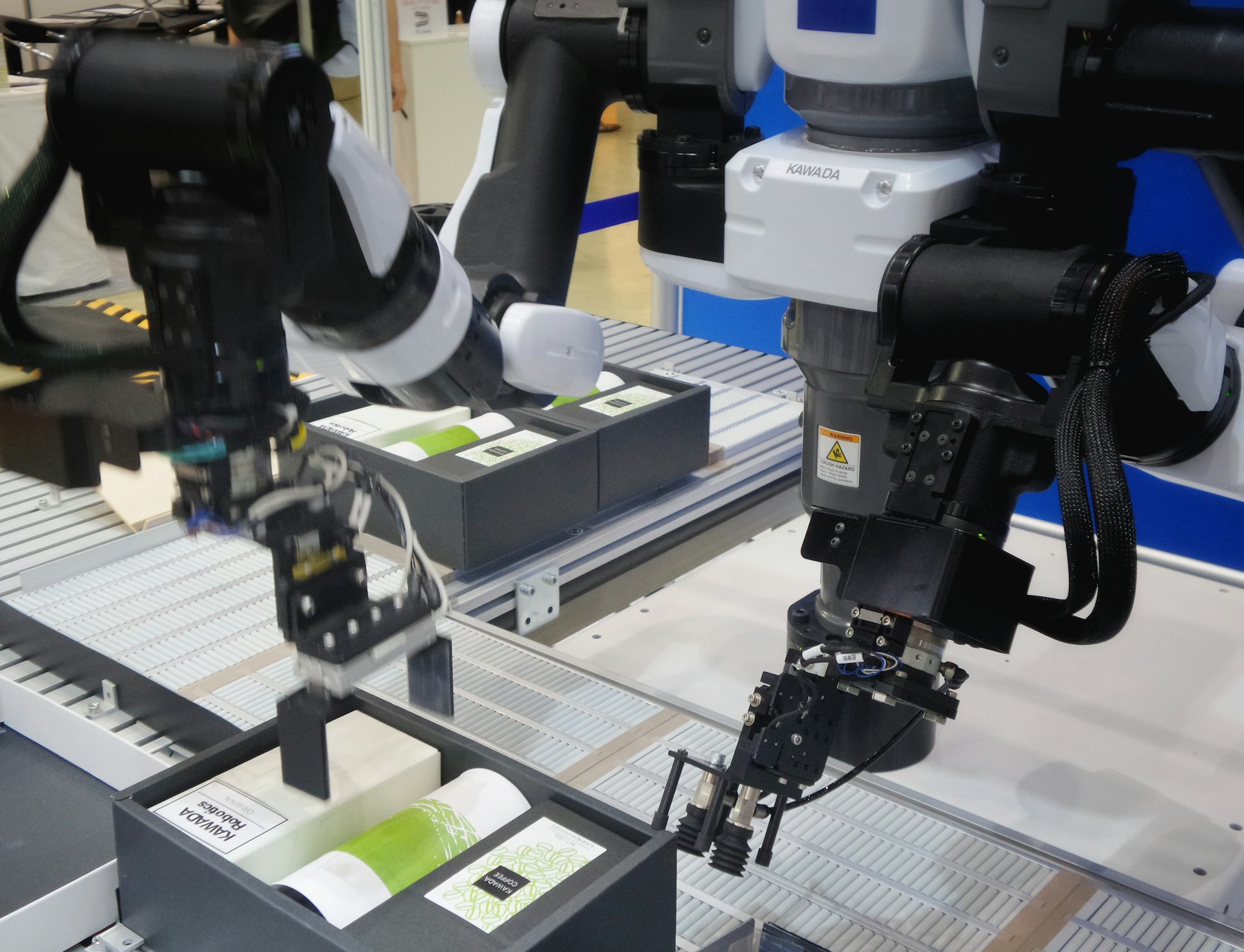
Factories have always run on precision and repetition, which makes manufacturing one of the most natural environments for artificial intelligence to take hold. Unlike industries where AI has to work around messy, unpredictable human behavior, manufacturing floors are full of structured data: sensor readings, production counts, machine temperatures, and quality inspection results, all generated constantly and consistently. That structure is exactly what AI systems thrive on, and it’s why the technology has moved from pilot programs to genuine production use faster in manufacturing than in many other sectors.
Predicting Equipment Failures Before They Happen
Unplanned downtime is one of the most expensive problems a factory can face. A single failed motor or conveyor system can halt an entire production line, and traditional maintenance schedules, which service equipment at fixed intervals regardless of actual condition, often either replace parts too early or miss failures that happen between scheduled checks.
Predictive maintenance flips that approach. Sensors attached to machinery continuously feed data like vibration, temperature, and sound into AI models trained to recognize the subtle signs that precede a breakdown. Instead of guessing when a part might fail, factories can now get a fairly accurate estimate of when a specific piece of equipment is likely to need attention, and schedule the repair during planned downtime rather than dealing with an unexpected stoppage in the middle of a production run.
Catching Defects the Human Eye Misses
Quality control has traditionally relied on human inspectors, either checking finished products manually or reviewing samples at set intervals. This works, but it’s limited by fatigue, inconsistency between inspectors, and the simple fact that a person can only look at so many items per minute without missing something.
Computer vision systems powered by AI can now inspect products on the line at speeds no human could match, flagging microscopic cracks, misaligned components, or surface defects with a level of consistency that doesn’t degrade over an eight-hour shift. In industries like electronics or automotive parts, where a single undetected flaw can lead to costly recalls or safety issues down the line, this kind of automated inspection has become less of an upgrade and more of an expectation.
Optimizing How Factories Actually Run
Beyond individual machines, AI is increasingly being used to manage entire production processes. Scheduling software powered by machine learning can adjust production plans in real time based on material availability, demand forecasts, and machine capacity, something that used to require manual planning and constant manual adjustment when circumstances changed.
Energy use is another area seeing real gains. Manufacturing plants consume enormous amounts of electricity, and AI systems that monitor usage patterns across a facility can identify inefficiencies, like equipment running unnecessarily or heating and cooling systems working against each other, that would be nearly impossible to catch through manual review alone.
Robotics and the Rise of Adaptable Automation
Industrial robots aren’t new, but the robots showing up on factory floors today are considerably more capable than their predecessors. Older automation systems needed to be reprogrammed by specialists for even minor changes to a task. AI-powered robots can now adjust to variations in their environment, such as slightly different part placements or object sizes, without needing to be manually recalibrated every time something shifts.
This flexibility has made automation practical for smaller manufacturers who previously couldn’t justify the cost of rigid, single-purpose robotic systems. It’s also changed the kind of work robots are used for, moving beyond repetitive assembly line tasks into more variable jobs like sorting, packing, and even some quality inspection work that used to require a trained human eye.
What This Means for the Workforce
The conversation around AI in manufacturing inevitably turns to jobs, and it’s a legitimate concern. Certain repetitive, predictable tasks are genuinely being automated, and some roles built entirely around those tasks are shrinking. At the same time, new roles are emerging around maintaining, training, and overseeing these AI systems, and workers who can bridge the gap between traditional manufacturing knowledge and newer technical skills are finding themselves in a stronger position than either the purely manual laborer or the purely technical specialist.
Retraining programs, both from employers and from public workforce initiatives, are becoming a more urgent part of this transition, and how well that retraining is handled will likely determine whether AI adoption in manufacturing ends up displacing workers broadly or simply shifting what their day-to-day responsibilities look like.
What’s fairly clear at this point is that manufacturing isn’t approaching AI cautiously the way some other industries have. The return on investment, in the form of less downtime, better quality control, and more efficient operations, has been concrete enough that factories are moving quickly, and the pace of that adoption is only likely to accelerate as the technology continues to mature and costs continue to come down.